If you are looking at a telehandler, you are probably trying to answer one simple question.
Do I need one, or would a forklift do the job just as well for less money?
It is a fair thing to ask. Both machines lift loads. Both can move pallets. Both show up on construction sites, farms and industrial yards all over Southeast Queensland.
But they are built for very different kinds of work. Pick the wrong one and you either pay for reach you never use, or you end up with a machine that cannot get where the job needs it to go.
Here is how to tell which one fits.
What A Telehandler Does That A Forklift Cannot
A forklift lifts straight up. The mast raises the forks vertically, and the load stays close to the machine.
A telehandler works differently. It uses a telescopic boom that extends up and out, which means it can lift a load forward and over obstacles instead of just straight up.
That one difference changes everything.
With a telehandler, you can:
- place materials onto a roof, upper floor or scaffold
- reach over a truck, wall or trench
- swap forks for buckets, jibs or grabs
- work across rough, uneven ground
A forklift simply is not designed for that kind of reach. If your loads need to go up and forward, a telehandler is often the only practical choice.
Where A Forklift Still Wins
Telehandlers are versatile, but they are not always the smarter buy.
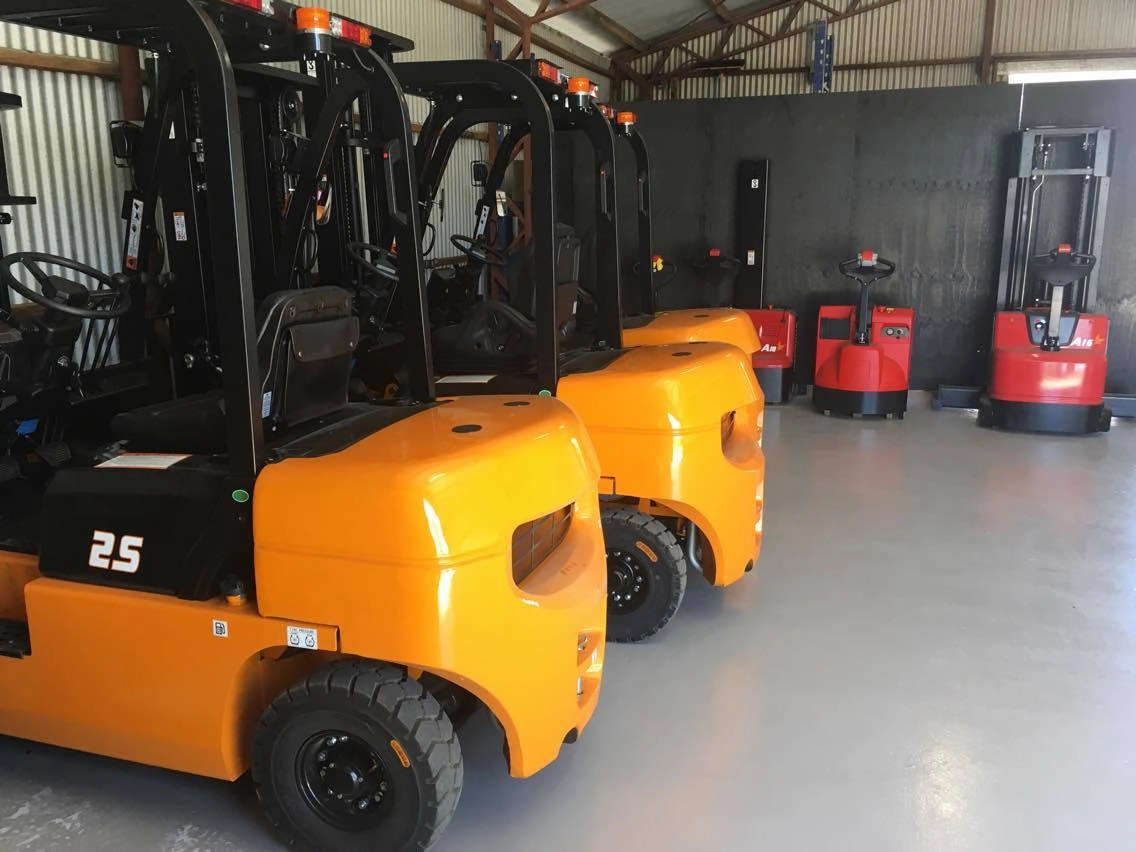
In warehouses, loading docks and yards where loads mainly move on and off trucks or in and out of racking, a forklift is usually faster, more compact and easier to manoeuvre. It turns tighter, fits narrower spaces and handles repetitive pallet work with less fuss.
A forklift also tends to make more sense when:
- most lifting is vertical, not forward
- the machine will spend much of its time indoors
- space is tight and turning circles matter
- speed and cycle times drive productivity
If that sounds like your site, adding boom reach you will rarely use is just extra cost and extra machine to fit through the gate.
The Ground Under Your Wheels Matters More Than You Think
A lot of buyers focus on lift height and forget about the surface.
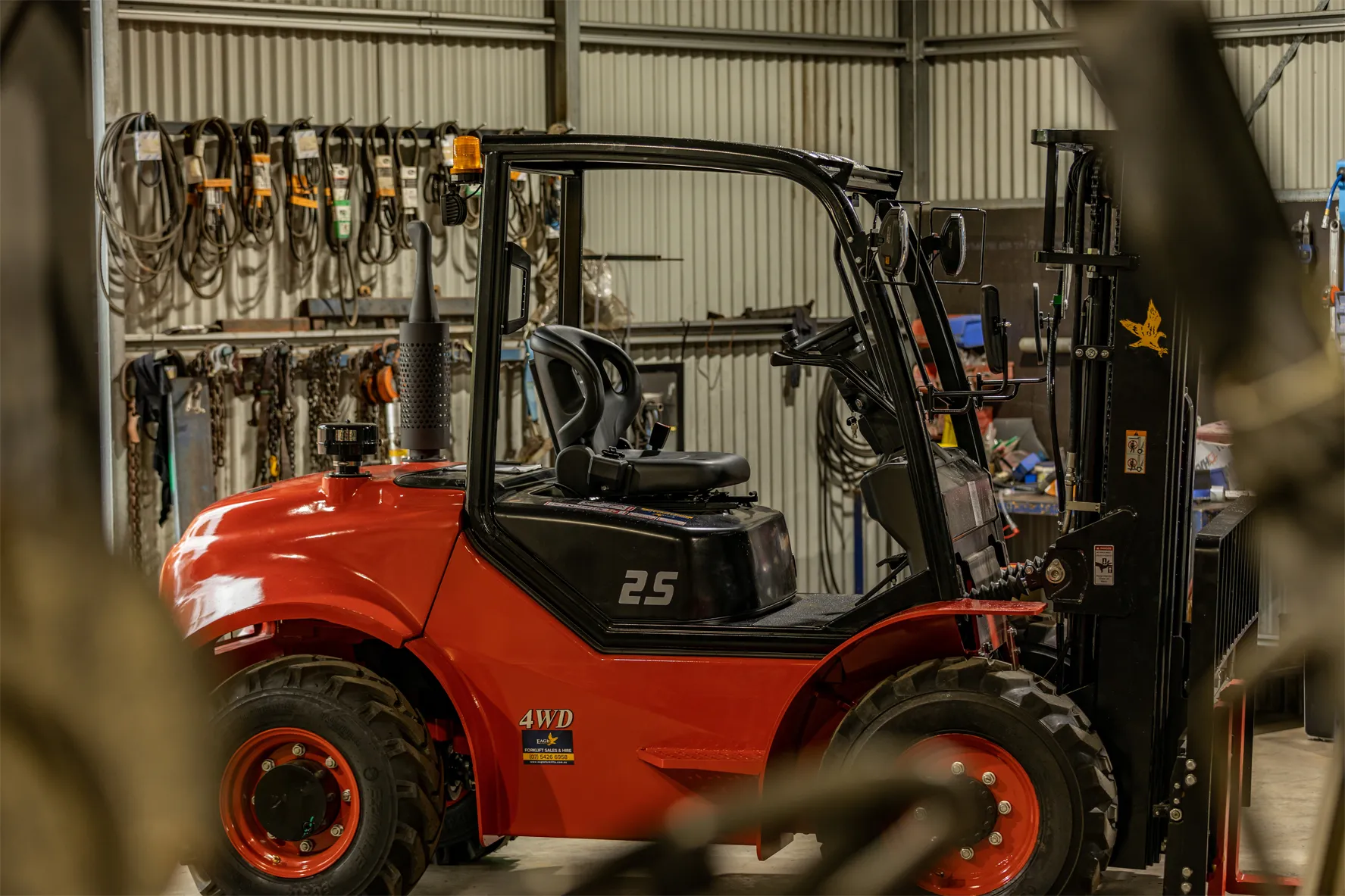
Telehandlers are generally built for rough terrain. Many run four wheel drive, bigger tyres and higher ground clearance, which lets them work on dirt, gravel, mud and slopes where a standard warehouse forklift would struggle or get stuck.
That said, a telehandler is not the only option for tough ground. A rough terrain forklift also brings four wheel drive, chunky tyres and extra clearance, but keeps the vertical mast of a forklift.
So if your problem is mainly ground conditions rather than reach, a rough terrain forklift may be the better middle ground. If you need both rough ground capability and forward reach, that is where a telehandler earns its money.
Think About The Whole Job, Not Just The Heaviest Lift
It is tempting to buy for the biggest lift you ever do. That is often the wrong way around.
Start with what the machine will do day in, day out. If ninety percent of the work is moving pallets across a yard, and the occasional high placement could be handled another way, a forklift may still be the better fit.
If the daily work involves loading materials onto upper levels, moving loads over obstacles, or switching between forks and a bucket, a telehandler will likely pay for itself through time saved and fewer machines on site.
Ask yourself:
- how often do we need forward reach
- how high and how far out do loads go
- what ground does the machine work on
- would one versatile machine replace two
The answers usually point clearly in one direction.
Licensing And Safety Are Different For Telehandlers
This is where a lot of businesses get caught out.
A forklift in Queensland requires the operator to hold the right high risk work licence class. WorkSafe Queensland sets out the forklift truck licence requirements, including how a forklift truck is defined.
Telehandlers sit a little differently. When used with forks or a bucket, they generally require competency based training rather than a specific high risk work licence. But once you fit a jib or hook and start using a larger telehandler as a crane, crane licensing can come into play. SafeWork SA’s Know Your Telehandler guide gives a clear breakdown of how attachments change the requirements.
Because licensing depends on the machine, the attachment and how it is used, check the current rules on WorkSafe Queensland’s what licence do I need page before putting a machine to work.
Buy Or Hire A Telehandler
If you only need reach for one stage of a project, hiring can be the smarter move.
A lot of construction and fit out work needs a telehandler for a few weeks, not a few years. Hiring lets you get the right machine for that phase without tying up capital in something that will sit idle later.
If the machine will be working most days, buying usually makes more financial sense over time. Some businesses also hire first to test a telehandler on their site, then buy once they know exactly what specification works best.
How Eagle Forklifts Helps You Choose
Eagle Forklifts supplies both telehandlers and forklifts, which means the advice is not tilted toward whatever happens to be in stock.
The range includes a lithium-ion 4×4 telehandler with a 2,500 kg capacity and a six metre lift height, alongside rough terrain forklifts from compact 4WD units through to heavy diesel machines. For sites that need both reach and rough ground capability, or just one of the two, the team can talk through the trade offs in plain terms.
With more than 30 years in the industry, flexible hire options and a local service team, Eagle can help you work out whether you need a telehandler at all, and which one fits if you do.
Get The Right Machine For The Way Your Site Works
If you are weighing up a telehandler against a forklift, the right answer comes from your loads, your ground and how often you need forward reach.
You can browse Eagle Forklifts’ telehandler range here, check out the rough terrain forklifts, or contact the team for practical advice on what suits your site.
Frequently Asked Questions About Telehandlers
What is the difference between a telehandler and a forklift?
A forklift lifts loads vertically on a mast, while a telehandler uses a telescopic boom that lifts up and out. That gives a telehandler forward reach and more attachment options, while a forklift is usually more compact and faster for standard pallet work.
Can a telehandler replace a forklift?
On rough outdoor sites it often can, especially when forward reach is needed. In warehouses and tight loading areas, a forklift is usually more efficient and easier to manoeuvre.
Do you need a licence to operate a telehandler in Queensland?
It depends on how the telehandler is used. With forks or a bucket, competency based training is generally required, but some crane style configurations need a high risk work licence, so check WorkSafe Queensland’s licence guidance for your setup.
Is a telehandler or rough terrain forklift better for uneven ground?
Both are built for rough terrain. A rough terrain forklift suits vertical lifting on tough ground, while a telehandler is the better choice when you also need to reach forward or over obstacles.
Should I hire or buy a telehandler?
Hiring suits short projects or one off stages of work. Buying generally makes more sense when the machine will be working regularly across the year.