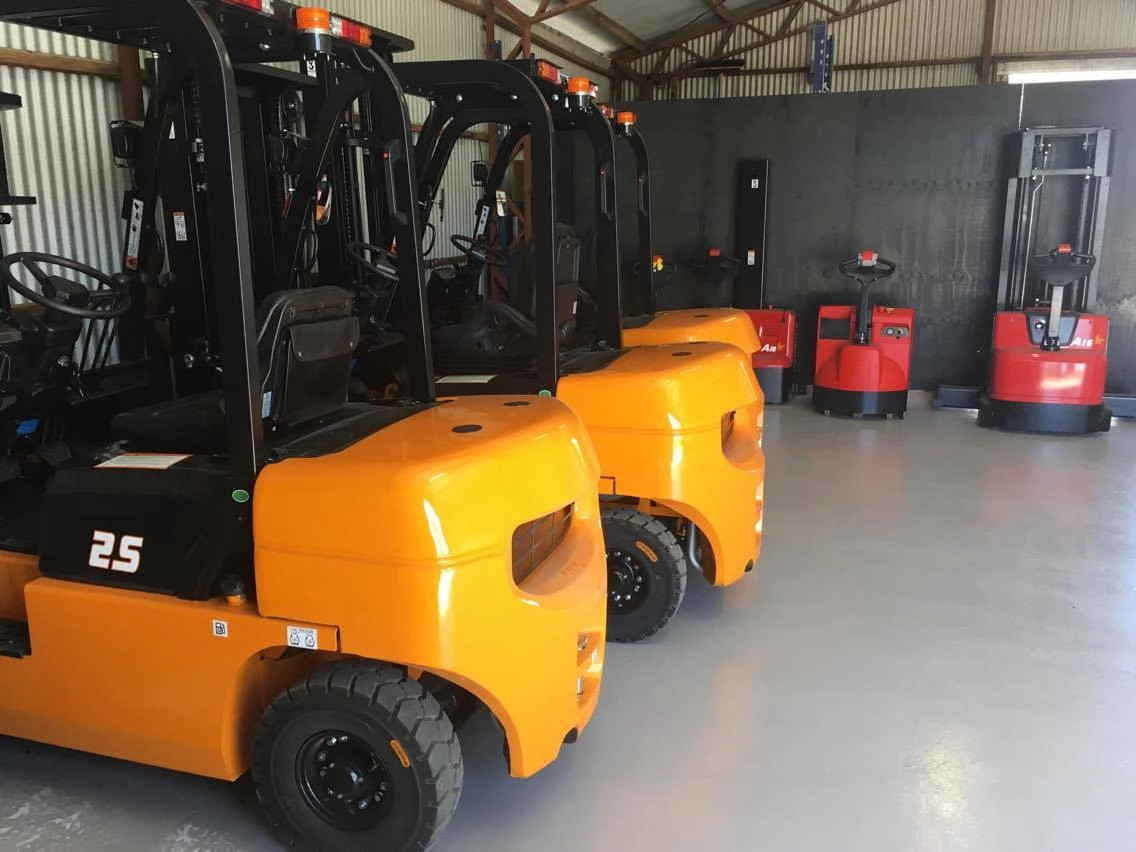
If you are replacing a forklift or buying one for the first time, this is usually the question that keeps coming back.
Diesel vs electric forklift sounds like a simple comparison until you start thinking about your actual site. One machine needs to work outside in rough conditions. Another needs to move quietly through a warehouse all day. Then lithium-ion enters the conversation and suddenly the choice feels even less clear.
The good news is that most businesses do not need a perfect forklift for every situation. They need the right forklift for their situation.
Here is the practical way to think about diesel and electric forklifts if you want to make the call with confidence.
Start With Where The Forklift Will Work
The easiest way to cut through the noise is to stop thinking about features first and think about environment first.
If your forklift spends most of its life outdoors, crossing yards, loading trucks, working on rougher ground, or covering long heavy shifts, diesel usually makes more sense.
If it spends most of its time indoors on smooth warehouse floors, moving stock through aisles, operating around people, or working in cleaner environments, electric usually starts to look stronger.
That one decision alone rules out a lot of bad matches.
For many businesses, the best forklift for warehouse Queensland operations is not the same as the best machine for a transport yard or construction site.
Why Diesel Still Wins In Tough Outdoor Work
Diesel forklifts are still hard to beat when the work is rugged, outdoor, and demanding.
They are well suited to:
- construction sites
- timber yards
- transport depots
- agriculture and rural supply operations
- mining support yards
- businesses that need strong performance over long shifts
That is why diesel remains a natural fit for many Queensland industries.
A diesel forklift for outdoor use handles uneven surfaces, changing weather, heavier workloads, and long run times with fewer practical limitations.
You refuel quickly and keep moving.
There is no need to work charging windows into the day or rethink the site around battery infrastructure.
If your operation is rougher, more open, and less predictable, diesel often feels like the straightforward choice because it is.
Why Electric Keeps Taking Over Indoor Sites
Electric forklifts have come a long way.
They are no longer the quiet alternative people consider only when diesel is not allowed.
For many indoor operations, they are now the first choice.
An electric forklift Brisbane warehouses choose today usually offers cleaner operation, less noise, and better suitability for enclosed workspaces.
That matters more than many buyers expect.
In food-grade facilities, warehouses, retail distribution centres, and other indoor environments, electric forklifts make day-to-day work feel calmer and easier.
There are no exhaust fumes hanging in the air.
Operators can communicate more clearly.
The machine often feels smoother and more precise in tighter spaces.
That does not just improve comfort. It can improve safety and productivity as well.
The Real Difference In Running Costs
This is where the conversation becomes less emotional and more practical.
Diesel forklifts are often cheaper to keep moving in outdoor applications because the site already suits them. Refuelling is simple, the work is heavy, and long run times matter.
Electric forklifts often make more financial sense indoors because their lower maintenance and energy costs can add up over time.
A good forklift fuel type comparison should not stop at the purchase price.
It should also look at:
- fuel or electricity costs
- servicing requirements
- downtime risk
- tyre wear based on site conditions
- how long the business plans to keep the machine
If a forklift is central to your daily workflow, total cost of ownership matters far more than who wins the upfront price comparison.
Where Lithium Ion Fits Into The Decision
This is the part of the conversation changing fastest.
A lithium ion forklift Australia buyers are looking at now is often the premium electric option.
Compared with older electric setups, lithium-ion usually offers:
- faster and more flexible charging
- less battery handling
- better suitability for multi-shift environments with planned charging breaks
- a cleaner fit for modern warehouse operations
That is why lithium is becoming a growth area for businesses that want electric performance without some of the traditional battery inconvenience.
The trade-off is price.
Lithium-ion usually costs more upfront than standard diesel or older electric alternatives.
For the right warehouse or indoor site, that extra spend can still make sense.
For a heavily outdoor business in Southeast Queensland, it may not be where the best value sits.
What Queensland Businesses Usually Need
Queensland is not one type of market.
That matters.
A warehouse in Brisbane has very different forklift needs to a yard supplying construction materials west of Ipswich or a business servicing agriculture and mining supply chains further out.
In general, diesel stays strong in outdoor-heavy sectors because those environments reward power, endurance, and quick refuelling.
Electric keeps gaining ground in warehousing, food handling, manufacturing, and any site where cleaner, quieter operation makes life easier.
That is why the best forklift for warehouse Queensland businesses choose is often electric or lithium, while diesel remains the obvious answer for many outdoor operations.
Neither option is “better” in every situation.
Each one is better in the right situation.
How To Make The Right Call Without Overthinking It
If you want the shortest path to the right decision, ask these questions.
Where does the forklift spend most of its time?
How rough is the surface?
How many hours per day will it run?
Do you need clean, quiet operation?
Do you have charging access and time built into the day?
Are long-term running costs more important than lower upfront spend?
Your answers will usually point clearly in one direction.
If most of the work is outdoors, rugged, and continuous, diesel is probably the better match.
If most of the work is indoors, people-heavy, and warehouse-based, electric is probably the better match.
If you want the premium indoor option and the operation can justify the spend, lithium-ion deserves a serious look.
Frequently Asked Questions
Is Diesel Or Electric Better For A Warehouse
For most indoor warehouses, electric is the better fit.
It is quieter, cleaner, and better suited to enclosed spaces. Diesel is usually better for outdoor yards and tougher site conditions.
Are Electric Forklifts Powerful Enough
Yes, for many warehouse and indoor operations they are more than capable.
The key is matching the electric model to the weight, lift height, and hours your business actually needs.
Why Do Some Businesses Still Prefer Diesel
Because diesel still performs extremely well in outdoor, heavy-duty, long-shift environments.
For businesses in construction, timber, transport, and similar sectors, diesel often remains the more practical tool.
Is Lithium Better Than Standard Electric
Lithium-ion can be a better electric option when fast, flexible charging and lower battery handling are important.
It usually costs more upfront, so the value depends on how intensively the machine will be used.
Can One Business Need Both Diesel And Electric Forklifts
Absolutely.
Many businesses use diesel forklifts outdoors and electric forklifts indoors. If your operation covers both environments regularly, a mixed fleet may be the most efficient solution.
Browse Diesel And Electric Forklifts Available Now
If you are weighing up diesel vs electric forklift options, the smartest move is to match the machine to the work your site actually does every day.
At Eagle Forklifts, we help businesses across Brisbane and Southeast Queensland compare diesel, electric, and lithium options in a practical way, so the decision feels clearer and the machine fits from the start.
Browse diesel and electric forklifts available now here and see which models suit your business best.