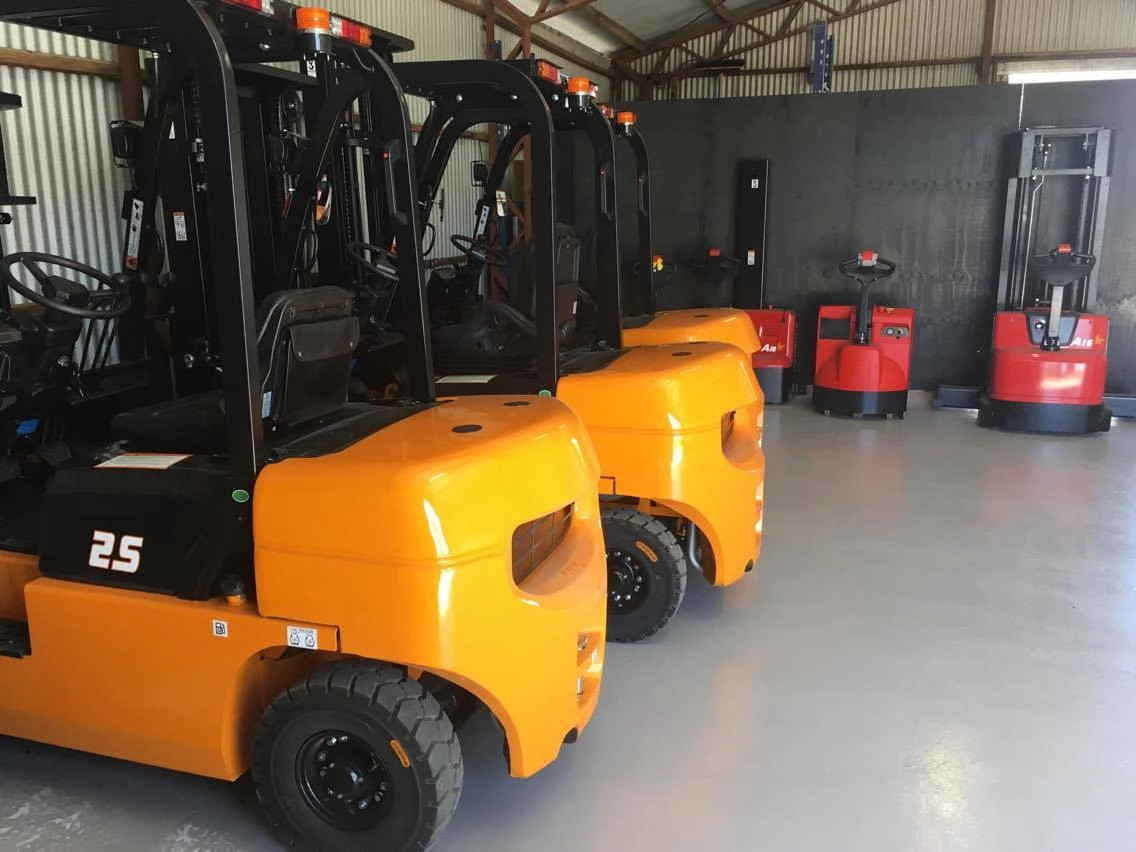
You wouldn’t think a forklift could teach you much about leadership.
After all, it doesn’t give motivational speeches. It doesn’t set KPIs. And it sure as hell doesn’t book itself in for a performance review.
But here’s what it does do, every single day.
It shows up. It does the heavy lifting. It doesn’t complain, doesn’t play favourites, and doesn’t pass the buck. It just gets on with the job.
And honestly? That’s a pretty solid benchmark.
Because managing a team isn’t about shouting from the rooftops or micromanaging every move. It’s about building a crew that works like a well-oiled forklift. Strong, reliable, and built for purpose.
In this blog, we’ll unpack the surprising (and strangely accurate) ways a forklift mirrors good team dynamics.
Whether you’re running a small warehouse or a growing business, there’s a thing or two you can learn from the humble machine with forks out front and zero tolerance for fluff.
Let’s get into it.
1. Every Team Member Has a Load to Carry
A forklift doesn’t sit around waiting to be told what to do. It has a role. It knows the weight it can lift. And it gets on with it—no drama, no excuses.
Good teams work the same way.
When people know their role, understand what’s expected, and are given the right tools to succeed, you don’t need to hover. They just get the job done. No load-dodging. No “that’s not my job” nonsense.
Management isn’t about making people do things—it’s about clearing the path so they can do what they do best.
You don’t throw a 5-tonne load on a 2.5-tonne forklift and expect it to cope. Likewise, you don’t overload your team and wonder why morale crashes. Know their limits. Back them with the right equipment. And respect the load they carry.
2. Maintenance Matters (Yes, Even for People)
Forklifts need servicing. Regularly. If you skip it, things start to squeak, rattle, and eventually break.
People are no different.
Burnout, lack of feedback, constant overtime—these are the human equivalent of running a forklift on empty and then being shocked when it breaks down.
Strong leaders know that looking after the machine isn’t a luxury—it’s a necessity. That means regular check-ins. Support when it’s needed. And knowing when to give someone a break before they blow a gasket.
You don’t just drive a forklift into the ground and buy a new one. You take care of it, because you value it.
Same goes for your team.
3. The Right Fit for the Job
There are forklifts built for warehouses, and ones built for rugged terrain. Some are electric. Some run on diesel. You wouldn’t take a clean electric forklift and throw it on a muddy job site—and you wouldn’t expect a mining forklift to glide through tight warehouse aisles.
Same rule applies to your people.
Putting someone in a role they’re not suited for doesn’t mean they’re bad—it just means the fit is wrong.
Some thrive in fast-paced environments. Others are better at deep focus and precision. As a leader, your job isn’t to “fix” people. It’s to place them where they’re most effective—where their natural strengths align with the needs of the business.
You don’t need to change the machine. Just give it the right job to do.
4. Smooth Operations Come from Trust and Timing
Forklift operators know something most managers forget: timing and flow make all the difference.
If one part of the operation is out of sync—say, pallets aren’t stacked properly or aisles are blocked—the whole thing slows down. There’s tension. Mistakes. And risk.
The same goes for teams.
Trust and timing are underrated management skills. Trust means you let people handle their role without hovering. Timing means you know when to jump in, when to delegate, and when to step back.
Too many managers either overstep or disappear entirely. But the best ones move like good forklift operators: smooth, deliberate, efficient. In control, but not controlling.
5. Visibility Isn’t Just About Mirrors
Forklifts are designed with visibility in mind—clear lines of sight, well-placed mirrors, open frameworks—because when you can’t see what you’re doing, you’re going to hit something.
Managing a team is no different.
If you can’t see what your team is working on, where they’re struggling, or what’s blocking them—you’ll make bad calls.
You don’t need to micromanage. But you do need visibility.
That means clear systems. Transparent communication. And a culture where people aren’t afraid to flag issues early.
Forklift drivers don’t rely on guesswork. They rely on sight lines and signals. You should too.
6. Downtime is the Silent Killer
Ever had a forklift go down mid-job? Everything stops. You scramble. Projects fall behind. Frustration kicks in.
Now think about what happens when a key team member hits the wall.
One person suddenly leaves, or gets overwhelmed, or just mentally checks out—and suddenly the whole operation starts creaking.
Prevention beats panic.
Leaders who think long-term don’t just plan for success—they plan for downtime. That means cross-training. Flexible systems. And support structures that catch things before they break.
Because downtime—whether mechanical or human—will cost you. The only question is whether you’re prepared for it.
7. Great Performance Comes from Simplicity
Forklifts aren’t complicated. They don’t come with 73 different buttons and settings you’ll never use. They’re built to do a job—and to do it well.
Managing a team should be the same.
Simple goals. Clear expectations. Direct feedback. Consistent support.
The best leaders don’t overcomplicate things. They don’t bury their team in processes or micromanage the life out of them.
They strip away what’s unnecessary and focus on what matters: performance, reliability, and growth.
It’s not about being fancy—it’s about being effective.
Ready to Put These Lessons to Work?
Managing a team is a lot like managing a fleet. It’s not about pushing harder, it’s about running smarter.
And just like the right leadership can unlock a team’s full potential, the right forklift can make or break your operations.
So if you’re in the market for something that’s built to go the distance, we’ve got diesel forklifts for sale, electric models, or something purpose-built for your site to get you covered.
At Eagle Forklifts, we’ve helped hundreds of businesses find machines that match their work ethic. We’re locals, so we know forklifts Brisbane businesses actually need, not just what looks good on paper.
From forklift for sale Brisbane listings to expert advice and servicing, we don’t just supply machines. We build partnerships.
Let’s talk about what you need—and what’ll help you lift more, with less.
Come see our full range of forklifts at https://eagleforklifts.com.au/