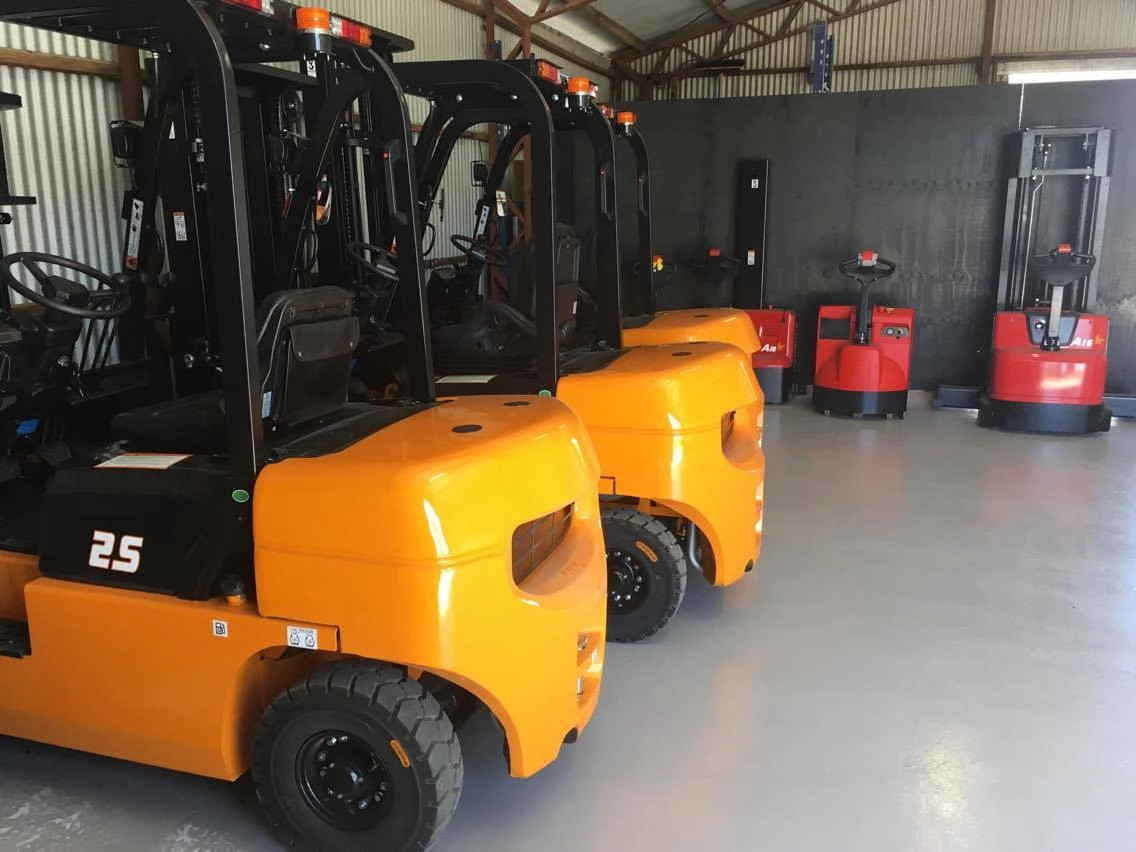
At first glance, a forklift doesn’t look that special. It’s just another machine with four wheels, a motor , and someone in the driver’s seat.
But ask anyone who’s spent time around one, and they’ll tell you, forklifts don’t play by the same rules as other machinery.
They steer from the rear , balance thousands of kilos on a counterweight, and rely on careful precision rather than brute force. One wrong move and the whole thing can tip, even if it’s standing still.
So while they might look simple, forklifts are a different beast altogether . Here’s what sets them apart from every other piece of equipment on the worksite.
Designed for Balance, Not Speed
Most machinery is built to move fast or pull hard. Forklifts are built to stay balanced. Everything about their design revolves around one goal, keeping heavy loads stable while lifting, tilting, and moving.
Instead of spreading weight evenly, forklifts use a counterbalance system. The heavy engine and frame at the back offset the load at the front. That’s why operators always keep the load low and tilted slightly back, it keeps the centre of gravity inside the machine’s “stability triangle.”
This focus on balance is what makes forklifts so unique. They’re not just vehicles, they’re precision tools that rely on physics as much as horsepower .
Rear-Wheel Steering Changes Everything
Here’s where most new operators get caught out. Forklifts steer from the rear , not the front like cars or trucks. It might sound like a small detail, but it changes everything about how they move.
When you turn the wheel, the back end swings out wide. The turning circle is tight, but it also means you can clip racks, pallets, or even people if you’re not paying attention. That’s why awareness and slow, deliberate movement are so important when driving a forklift in tight warehouse aisles.
Rear-wheel steering gives forklifts incredible manoeuvrability in small spaces — a huge advantage indoors. But it also means the operator needs a completely different mindset behind the wheel.
Lifting Comes with Limits
Most machinery either pushes, pulls, or carries. Forklifts lift, and that makes them one of the few machines where gravity is the main challenge.Every forklift has a data plate that shows exactly how much weight it can handle at certain lift heights. The higher you go, the less you can safely lift. That’s because the load’s centre of gravity moves forward as it rises, increasing the risk of tipping.
This is where many people underestimate forklifts. Just because it can pick something up at ground level doesn’t mean it can raise it safely to the top of a racking bay. Knowing and respecting those limits isn’t optional, it’s the difference between safe operation and a serious accident.
Forklifts Need Precision, Not Power
It’s easy to assume forklifts are about brute strength. But in reality, they’re about control. Operators spend most of their time making small, careful adjustments, easing forks under pallets, keeping loads balanced, and positioning products exactly where they need to go.
In that way, forklift operation is more like playing chess than rugby. The smallest movement matters. One careless inch can damage a pallet, a shelf, or the machine itself.
That’s why good operators are worth their weight in gold. They make hard work look effortless, using smooth hydraulic control instead of raw power .
Built for Tight Spaces and Constant Stops
Unlike excavators or tractors that spend their days outside, forklifts live in tight environments. Warehouses, loading docks, shipping containers, spaces where centimetres matter.
Forklifts are compact, but they also stop and start hundreds of times per shift. That kind of use means they’re designed with short bursts of power , strong brakes, and instant direction changes. It’s tough on the machine, but it’s exactly what the job demands.
Every component, from tyres to transmissions, is made for precision movement at low speeds. That’s a completely different world from most heavy equipment that’s built for long runs in open areas.
Visibility and Safety Come First
Because forklifts operate around people, visibility is critical. The mast, carriage, and load can all block the operator’s view, so modern forklifts are built with safety features that help offset that risk, mirrors, cameras, warning lights, and audible alarms.
Unlike many other machines, forklifts are designed to share the same space as pedestrians. That’s what makes safety training and awareness so vital. An operator’s skill isn’t just about lifting, it’s about knowing where everyone is, what the machine is doing, and what could go wrong in an instant.
Every Model Has Its Own Specialty
“Forklift” is an umbrella term, but not all forklifts do the same job. Electric forklifts are quiet and clean, perfect for warehouses and food storage.Diesel models bring the power for outdoor work and uneven terrain. Rough-terrain forklifts handle mud, gravel, and slopes. Reach trucks are made for narrow aisles and high racking.
Each type is a specialist in its environment. That’s another thing that separates forklifts from most other machinery, there’s no one-size-fits-all version. Choosing the right type matters just as much as how it’s operated.
Maintenance Matters More Than You Think
Because forklifts are constantly stopping, starting, and lifting, they wear differently than other vehicles. Small issues like low hydraulic fluid, worn tyres, or dirty filters can quickly cause major problems.
That’s why regular servicing and daily inspections are non-negotiable. Even minor neglect can lead to breakdowns, expensive repairs, or safety risks. A quick visual check at the start of each shift can catch most problems before they escalate.
At Eagle Forklifts, we always say: maintenance doesn’t just protect the machine — it protects the people using it.
Why This Matters
So why does any of this matter? Because understanding what makes a forklift different helps you use it better.
When operators know how it balances, steers, and lifts, they make smarter choices. When managers understand what each model is designed for , they pick the right tool for the job.
And when businesses respect those differences, they get safer worksites, longer-lasting machines, and fewer surprises.
Forklifts might look like just another piece of equipment, but once you know how they’re built and why they work the way they do, you see just how specialised they really are.
Learn More or Find the Right Forklift for Your Site
Whether you’re managing a warehouse, a construction site, or a logistics yard, the right forklift makes all the difference. Electric, diesel, or rough-terrain, each has its place, and our team can help you find the right fit for your work.
At Eagle Forklifts, we stock a full range of new and used forklifts for sale across Brisbane & Southeast Queensland, backed by expert advice, servicing, and WHS-ready compliance support.
Browse our full forklift range and see how the right machine can keep your site safe, efficient, and moving.