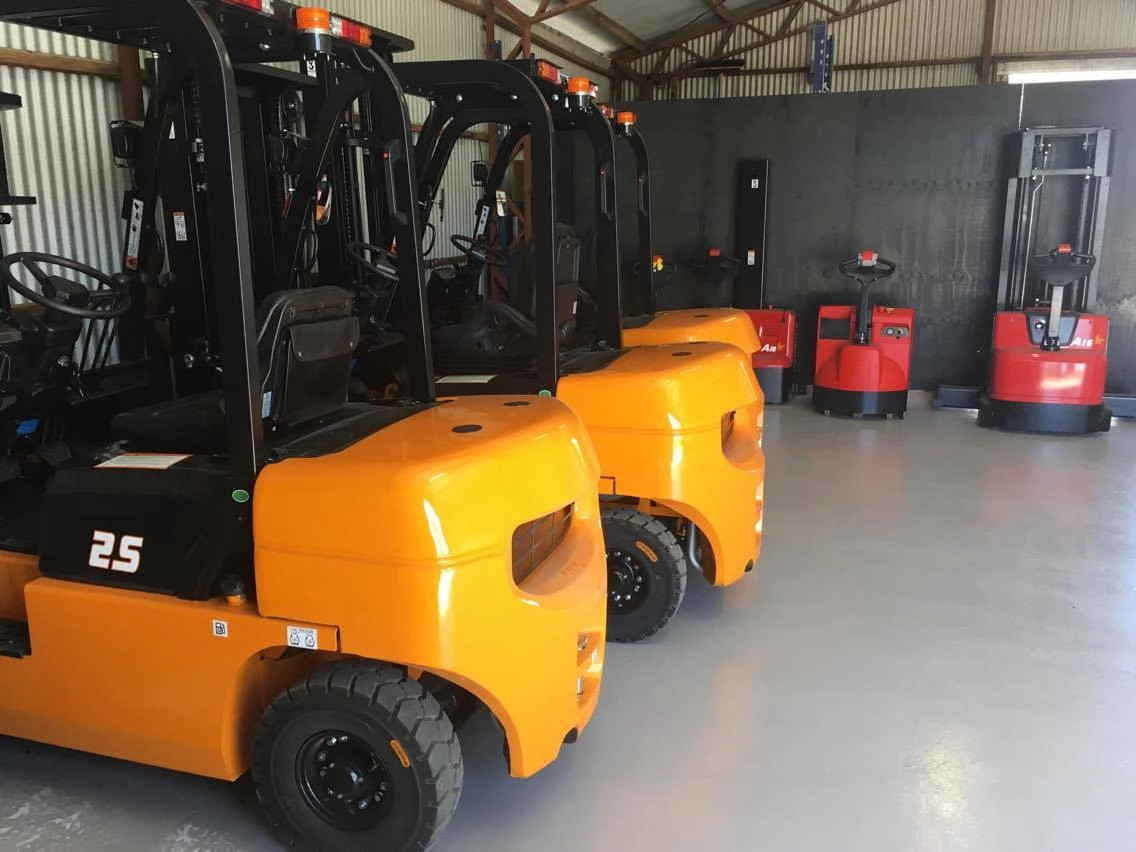
When people search diesel forklifts for sale, they are usually trying to answer one big question.
Does diesel still make sense for the kind of work we do, or am I about to buy old thinking in a market that is moving electric?
That is a fair question.
Electric forklifts are getting more attention for good reasons. But that does not mean diesel has stopped being useful. In plenty of Queensland worksites, diesel is still the practical choice because the environment is harder, the run times are longer, and refuelling matters more than charging convenience.
If you are weighing up diesel forklifts for sale, here is the clearest way to think about it.
Diesel Makes The Most Sense When The Work Is Tougher Than Average
The simplest answer is this.
Diesel usually makes more sense when the forklift is spending most of its time outdoors, working on rougher surfaces, lifting heavier loads, or running through long shifts without much downtime.
That is why diesel still shows up again and again in places like:
- transport yards
- construction and building supply sites
- timber and steel operations
- larger industrial yards
- mixed outdoor-heavy worksites
In those environments, the question is not whether diesel sounds modern.
It is whether the machine will keep working without making the site harder to run.
The Real Buying Question Is Not Diesel Or Electric
It Is Where Will This Forklift Actually Work
This is where buyers get clarity fast.
If the forklift lives indoors, electric usually starts looking stronger.
If the forklift lives outdoors, crosses uneven ground, or needs dependable performance through harder conditions, diesel still has a strong case.
That is why many businesses searching diesel forklifts for sale are not looking for the most fashionable option. They are looking for the option that best suits the site they already have.
That is the question worth answering first.
When Diesel Usually Wins
Diesel often comes out ahead when:
- the worksite is mostly outdoors
- the surfaces are rougher than warehouse concrete
- the machine needs to handle longer or heavier work cycles
- quick refuelling matters more than scheduled charging
- the site is not set up around charging infrastructure
In those conditions, diesel keeps the day moving in a very straightforward way.
You refuel and get back to work.
That simplicity still matters a lot in tougher Queensland environments.
When Diesel Starts To Be The Wrong Fit
Diesel is not the answer to everything.
If the forklift is going to spend most of its life indoors, around staff in enclosed areas, or in environments where air quality and noise matter, electric may be the better move.
That is where some buyers get stuck. They know diesel is tough and familiar, but they also know their site is becoming more warehouse-focused or more people-heavy.
That is exactly when it helps to stop thinking in general terms and think in practical ones.
What does the machine need to face most days?
That answer usually points clearly in one direction.
Diesel Still Has Strengths That Matter In The Real World
For outdoor-heavy businesses, diesel remains attractive because it does a few things very well.
- it handles harder site conditions confidently
- it suits longer run times without planning the shift around charging
- it is familiar to teams already working with internal combustion forklifts
- it can be a very practical fit for heavier daily use
That does not mean every diesel forklift is the right buy.
It does mean the fuel type still deserves serious consideration when the site rewards those strengths.
Buyers Need To Think About More Than Purchase Price
A cheap diesel forklift is not automatically a smart diesel forklift.
Before buying, you still need to look closely at:
- service history
- operating hours
- tyre condition
- mast and capacity suitability
- how well the machine has actually been maintained
- whether the supplier can support the machine locally
This matters even more with used stock.
A used diesel forklift can be excellent value if it has been properly looked after. It can also become a constant drain if the machine looks fine on the surface but is already tired underneath.
That is why the smartest buyers compare usefulness, not just price.
What About Diesel Exhaust And Indoor Air
This is one area where buyers need to be realistic.
Diesel forklifts and enclosed spaces are not always a comfortable match.
If the machine will spend meaningful time indoors, air quality becomes a serious consideration. Safe Work Australia has guidance on managing diesel exhaust risks in the workplace, and WorkSafe Queensland also outlines workplace duties around airborne contaminants here.
That does not rule diesel out for every mixed-use site.
It simply means buyers should be honest about how indoor the work really is.
Do Not Ignore Site Safety And Operator Practicality
The forklift that looks right on paper still has to work safely on your site.
That means thinking about visibility, pedestrian interaction, traffic flow, load stability, and route design. WorkSafe Queensland’s guidance on forklift hazards and controls is a good reminder that buying the right forklift is about safe fit, not just lifting power.
You also need the right people operating it. In Queensland, forklift operators need the appropriate licence class, which WorkSafe Queensland explains on its forklift truck licensing page.
So When Does Diesel Make More Sense Than Electric
Diesel makes more sense when the site is outdoor-heavy, rougher, longer-running, and better suited to quick refuelling than battery planning.
Electric makes more sense when the site is indoor-heavy, cleaner, quieter, and easier to support with charging.
That is the cleanest useful answer.
If your business works in tougher outdoor conditions across Brisbane and Southeast Queensland, diesel is not yesterday’s idea.
It is often still the practical answer.
Compare Diesel Forklifts With A Clearer Head
If you are looking at diesel forklifts for sale, the best next step is to compare machines against the way your site really operates, not the way a listing makes it sound.
Eagle Forklifts helps Brisbane and Southeast Queensland businesses compare diesel, electric, new, and used forklifts with practical local advice and support that continues after the sale.
You can browse Eagle Forklifts’ current range here or contact the team for help narrowing down the right option.
Frequently Asked Questions
Are Diesel Forklifts Still Worth Buying
Yes, when the work is mainly outdoors, tougher, and more demanding than a typical indoor warehouse environment.
Diesel still makes a lot of practical sense in the right conditions.
Are Diesel Forklifts Better Than Electric
Not in every situation.
Diesel often wins outdoors. Electric often wins indoors. The better option is the one that suits the environment the forklift will actually face.
Can Diesel Forklifts Be Used Indoors
Indoor use raises air quality concerns, which is why buyers need to be careful about how enclosed the work area really is.
Safe Work Australia provides guidance on diesel exhaust exposure here.
What Should I Check Before Buying A Diesel Forklift
Check site conditions, lift requirements, service history, hours, and whether diesel genuinely suits where the machine will spend most of its time.
That matters far more than a quick headline price.
Do Diesel Forklift Operators Need A Licence In Queensland
Yes.
WorkSafe Queensland explains the current forklift licence requirements here.