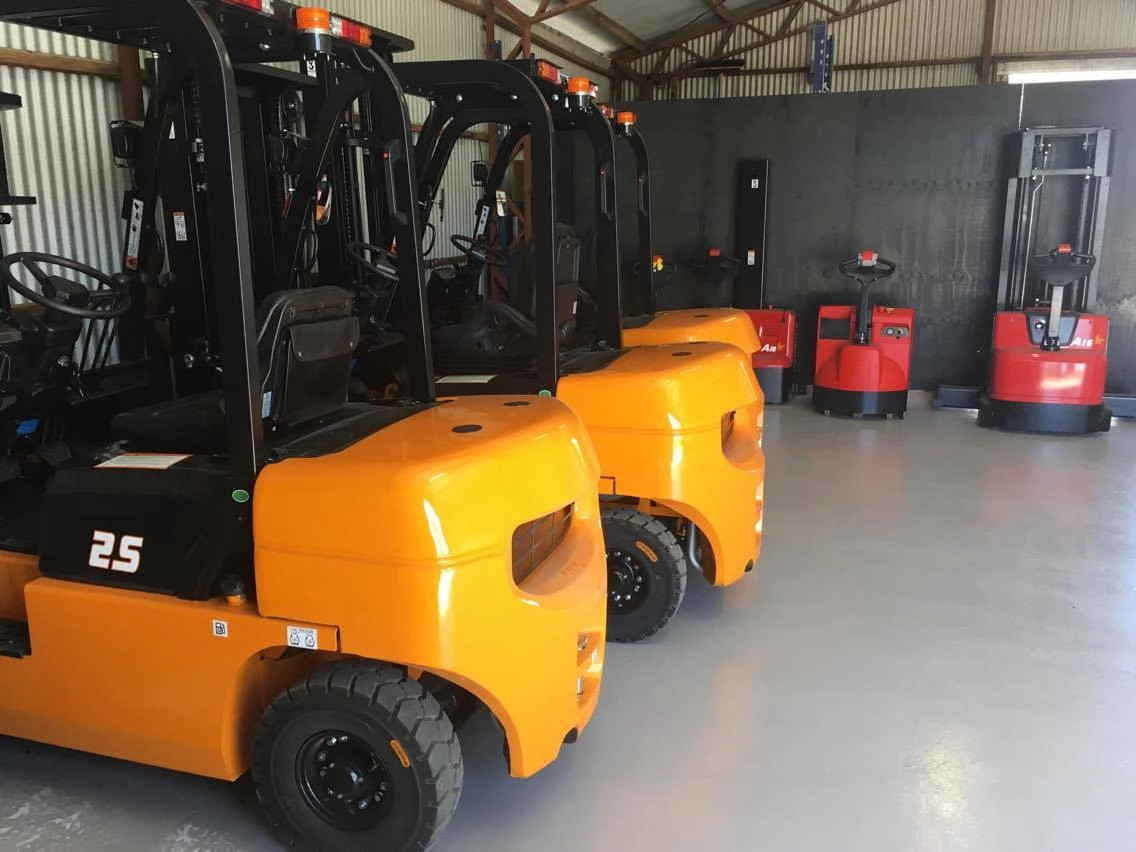
There is a reason so many buyers feel more confident looking at new forklifts for sale in Brisbane.
New feels safer.
You get the appeal of a clean machine, a fresh warranty, and the comfort of believing that fewer surprises are waiting around the corner. In plenty of cases, that instinct is right.
But “new” does not automatically mean “right.”
A brand-new forklift that does not suit your site, your loads, or your daily run demands can still become an expensive source of frustration. The biggest mistake is assuming that buying new removes the need to think carefully.
It does not.
It just changes the type of decision you need to make.
Why Businesses Start Looking At New Forklifts In The First Place
Most buyers do not begin here because they feel impulsive.
They start looking because the business has reached a point where reliability matters more than patching things together.
That might mean the current machine is becoming unpredictable. It might mean the team is losing time around repairs and workarounds. Or it might mean the site is growing enough that an older forklift no longer feels like a smart long-term bet.
In those moments, a new forklift becomes attractive for good reasons.
- warranty support
- greater confidence in day-to-day reliability
- the chance to match the machine closely to the work
- a stronger long-term fleet decision
All of that is real.
The catch is that the value only shows up if the forklift actually fits the operation.
New Does Not Protect You From A Bad Match
This is the part some buyers learn too late.
A forklift can be brand new and still wrong.
It can be too large for the aisles, too light for the workload, too outdoor-focused for an indoor environment, or too limited for the shift demands the business places on it. When that happens, the problem is not quality.
The problem is fit.
That is why buyers comparing new forklifts for sale in Brisbane need to work backwards from the site and the workload first.
A forklift should not just look right on a quote.
It should feel right once it arrives and starts doing real work.
The Questions That Matter Before You Buy New
The best new forklift decisions are usually guided by a small set of very practical questions.
- What are the heaviest loads this machine will handle regularly
- How high do those loads need to go
- Is the work mainly indoors, outdoors, or mixed
- How tight are the aisles, doorways, and turning areas
- How many hours per day will the forklift run
- Will attachments, specialist mast setups, or certain tyre types matter
These are not small details.
They are the difference between buying new with confidence and buying new on instinct.
If the answers are vague, the shortlist often stays too broad for too long.
If the answers are clear, the right machine usually starts standing out fast.
Why Lead Time Matters More Than Buyers Expect
One of the less exciting realities about buying new is that not every forklift is ready to arrive next week.
If a particular capacity, configuration, or model is already in Australian stock, timing can be straightforward.
If it is not, the wait can become part of the decision.
That matters because urgency changes behaviour. Businesses under pressure sometimes rush into the wrong choice because it feels easier to buy what is available now than to buy what is actually right.
Sometimes that is still the right call.
Other times, it is smarter to think strategically. That might mean ordering the right machine and using a hire forklift to bridge the gap rather than locking into a new forklift that solves today’s timing problem but creates next year’s operating problem.
The Right New Forklift Should Support How Your Team Actually Works
A forklift is not just a spec sheet.
It is a daily-use tool.
If operators are constantly adjusting because the machine is too bulky, visibility is awkward, or the layout feels clumsy, the team pays for that in small ways every day. Those small ways rarely show up in the purchase quote, but they show up in pace, fatigue, confidence, and site flow.
That is why the smartest buyers do not just ask whether a forklift can do the job.
They ask whether it will do the job comfortably and repeatedly without creating extra friction.
That is a better standard.
New Forklifts Still Need The Right Power Type
A lot of new forklift buyers also assume the real choice is simply which model to choose.
Often the bigger choice is the type of forklift that makes sense for the environment.
If the machine will spend most of its time indoors, around people, stock, and smooth warehouse floors, electric often becomes a strong contender.
If the forklift will work outside, handle longer rougher shifts, or deal with harder conditions, diesel may still be the better fit.
That is why a new forklift should not be chosen by trend.
It should be chosen by site reality.
WorkSafe Queensland’s overview of forklift hazards and controls is a useful reminder that safe forklift decisions start with the work environment, not just the product range.
Warranty Is Valuable But It Is Not The Whole Story
A warranty matters.
So does local support.
So does the ease of getting advice, servicing, parts, and practical help once the forklift becomes part of the business. That is why buyers comparing new forklifts for sale in Brisbane should think beyond the first sale and look at the relationship behind the machine.
A new forklift should bring more confidence, not just on day one, but over the months and years that follow.
That confidence comes from more than a new serial number.
It comes from choosing well and being supported properly.
A Better Way To Think About Buying New
The strongest reason to buy new is not just that the machine is new.
It is that the machine is the right long-term fit for the way your site runs.
If buying new helps you reduce downtime, lift operator confidence, improve productivity, and run the site with fewer interruptions, then the decision usually makes sense.
If “new” is being used to cover uncertainty about what the site really needs, the decision may need more work before you commit.
That pause can save a lot of money.
Choose A New Forklift That Still Feels Right Six Months From Now
The best new forklift purchases are the ones that keep proving themselves after the excitement of the handover fades.
They make the day run better. They fit the space. They suit the load demands. And they give the business a more stable platform to keep moving forward.
If you are comparing new forklifts for sale in Brisbane, Eagle Forklifts can help you narrow down the right option based on your site, your workflow, and the way the machine will actually be used.
You can browse the current range here or contact the Eagle Forklifts team here to talk through the best fit for your business.
Frequently Asked Questions
Are New Forklifts Worth The Extra Cost
They often are when reliability, warranty support, and long-term daily use matter.
The value usually comes from reduced uncertainty and a better fit for businesses that rely heavily on forklift uptime.
How Do I Know Which New Forklift To Buy
Start with the site and the workload.
Load weight, lift height, daily hours, indoor versus outdoor use, and layout all matter more than brand familiarity alone.
Is It Better To Buy New Or Hire First
That depends on urgency and clarity.
If you know exactly what the business needs, buying new may make sense. If timing is tight or the best-fit machine has a longer lead time, hiring first can be a smarter bridge.
Are Electric New Forklifts Better Than Diesel
Not in every case.
Electric often suits indoor warehouse environments. Diesel often makes more sense for tougher outdoor use and longer harder run cycles.
Do Operators Need A Licence To Use A New Forklift In Queensland
Yes.
WorkSafe Queensland explains the current forklift licence requirements here.