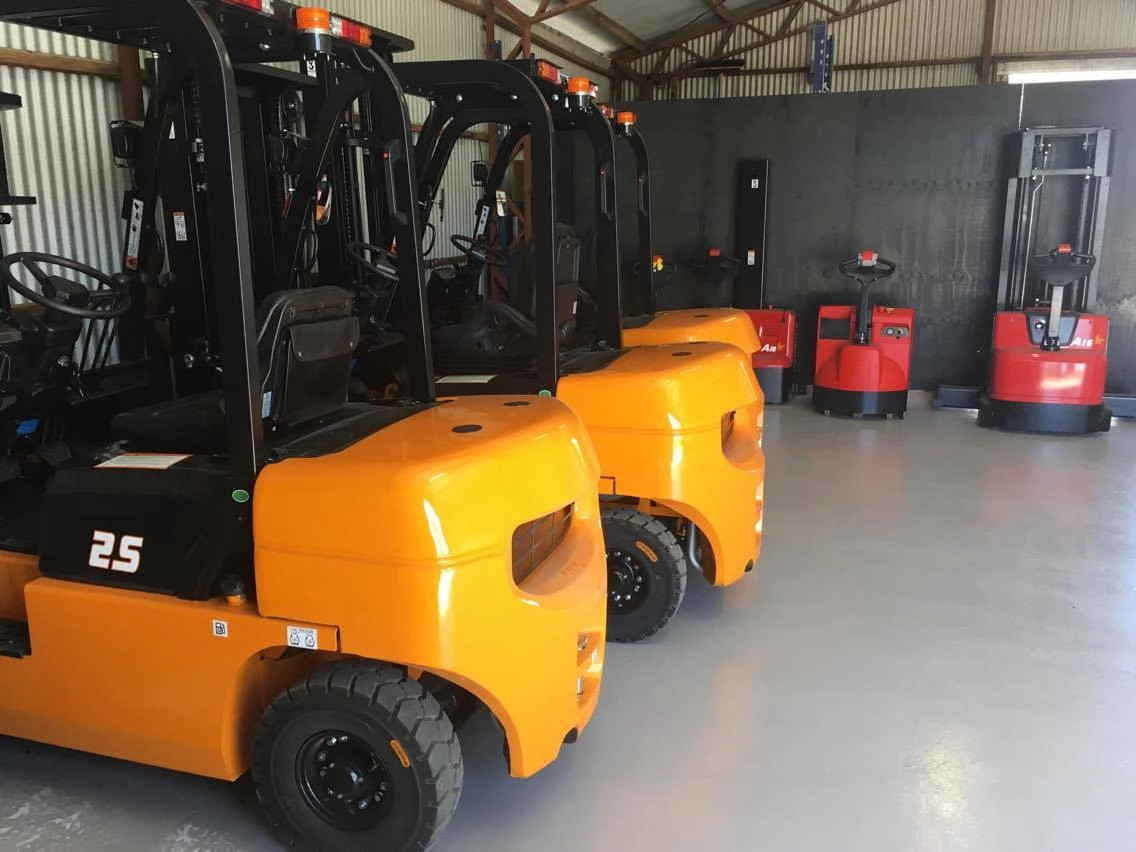
Picture a warehouse thirty years ago. Diesel fumes hanging in the air. Engines roaring so loud you had to shout across the aisle. Floors marked black from exhaust. That was the daily reality for countless operations
Fast forward to today, and things look very different. Warehouses are cleaner, quieter, and more efficient, thanks to electric forklifts
No fumes choking the air. No constant rumble in the background. Just smooth, precise machines doing the heavy lifting without the headaches.
Clean Air and a Healthier Work Environment
One of the biggest advantages of electric forklifts in warehouses is air quality. Traditional diesel or LPG forklifts produce exhaust fumes that linger indoors, affecting workers and sometimes even products.
With electric forklifts, that problem disappears. No tailpipe emissions means cleaner air and safer conditions for everyone inside.
Quieter Operations That Boost Productivity
Noise might seem like a small thing, but in a busy warehouse, it adds up fast. Constant engine noise makes it harder for operators to communicate, increases stress, and can even lead to mistakes or accidents.
Electric forklifts run much quieter than their diesel or LPG counterparts. That doesn’t just make the warehouse more pleasant, it makes it more efficient.
Lower Running Costs Over Time
Yes, electric forklifts can be more expensive upfront. But when you look beyond the purchase price, the savings become clear.
Electric forklifts have fewer moving parts than internal combustion models. That means fewer breakdowns, less servicing, and lower maintenance costs overall. You’re not paying for oil changes, exhaust repairs, or frequent fuel refills.
Easy Charging and Long Shifts with Lithium Technology
One of the old criticisms of electric forklifts was downtime for charging. But with modern lithium-ion technology, that’s no longer an issue. These batteries can be opportunity charged during breaks — even for short periods — without harming the battery life.
For warehouses running multiple shifts, that flexibility is a game-changer. You no longer need to swap batteries or schedule long charging cycles.
Compact Design for Tight Warehouse Spaces
Warehouses often deal with narrow aisles and tight turning circles. Electric forklifts are typically more compact and easier to manoeuvre than their fuel-powered counterparts, making them ideal for these environments.
Improved Safety Features
Modern electric forklifts come equipped with advanced safety technology.
Features like regenerative braking, stability controls, and operator presence systems are becoming standard. These aren’t just bells and whistles, they directly reduce the risk of workplace accidents.
Supporting Sustainability Goals
Sustainability isn’t just a buzzword anymore, it’s a real business priority. More companies are looking for ways to reduce their carbon footprint and improve their environmental credentials.
Electric forklifts fit right into that goal. With no exhaust emissions and reduced energy use, they’re far friendlier to the environment than traditional forklifts.
Why Electric Forklifts Make Sense for Warehouses (But Not Always Everywhere)
Electric forklifts are a natural fit for warehouses. They shine in environments where clean air, low noise, and tight manoeuvrability are essential. If your operation is mainly indoors, electric is often the smarter long-term choice.
That said, electric isn’t a one-size-fits-all solution. For outdoor yards, heavy-duty lifting, or sites where charging infrastructure isn’t practical, diesel forklifts still hold the advantage. They bring raw power, longer run times, and flexibility in tough environments where electric just isn’t as efficient.
Ready to Upgrade Your Warehouse Fleet?
If you’re still relying on diesel or LPG forklifts in your warehouse, it might be time to rethink your setup. Electric forklifts are no longer the future, they’re the present.
At Eagle Forklifts, we stock a wide range of electric forklifts for sale in Brisbane and across Queensland, designed to meet the demands of modern warehouse operations.
Whether you need compact models for tight aisles or higher-capacity units for heavy lifting, we can help you find the perfect match.