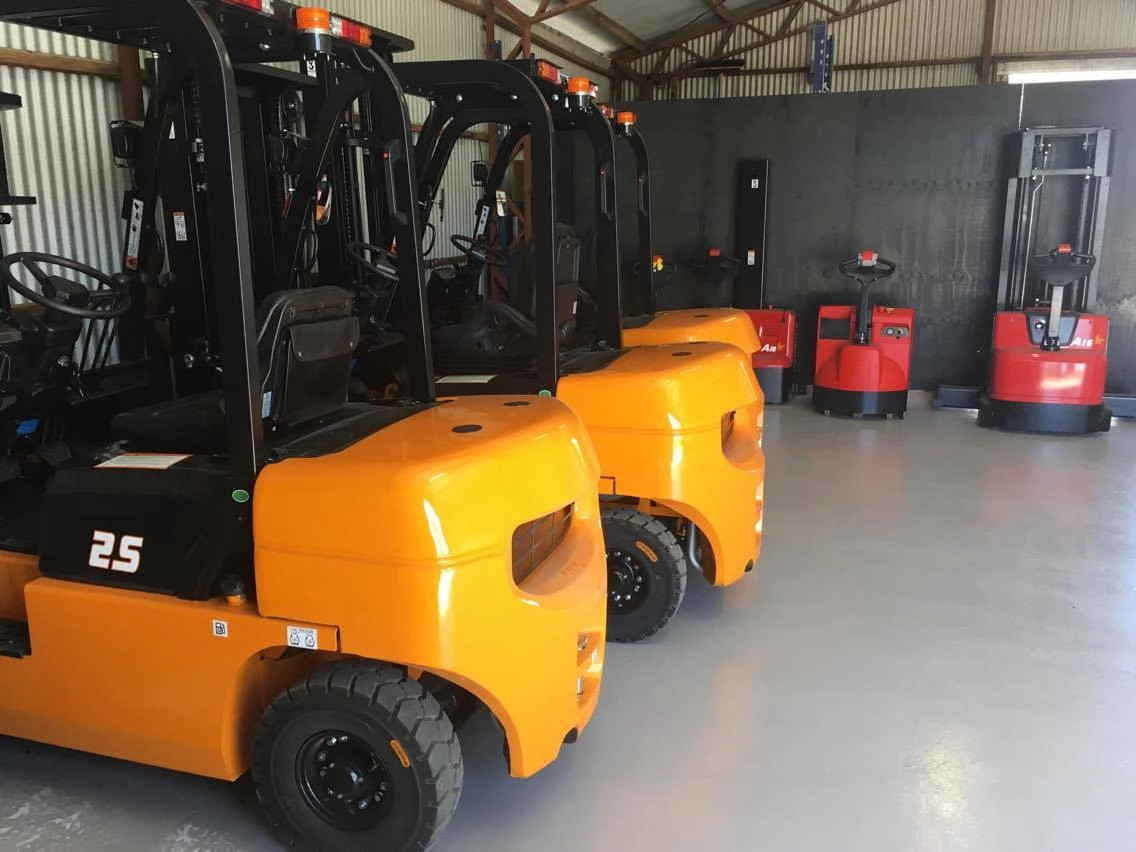
You don’t buy a rough terrain forklift for fun. You buy it because you’ve got a job to do, and it’s not on a smooth, flat surface.
It’s in the mud. On gravel. In the rain. Or halfway up a track that barely counts as a road.
And when you’re working in places like that, you need gear that doesn’t throw in the towel the second conditions get tough.
That’s why more and more operators are investing in diesel 4WD forklifts.
Not because they’re chasing bells and whistles. But because they’re sick of machines that look tough… and crumble the second they’re put to work.
These forklifts are built different. They’ve got the clearance. The traction. The power.
And most importantly, they’ve got your back when your team is counting on things to keep moving.
So yeah, rough terrain forklifts do cost a bit more upfront.
But if your worksite isn’t flat, dry and tidy?
You’ll find they’re worth every dollar.
Where Rough Terrain Forklifts Really Shine
Rough terrain forklifts aren’t for everyone.
And to be fair, they’re probably overkill if you’re just using them indoors, on concrete, in a tightly controlled environment. In those settings, a standard counterbalance electric or LPG forklift will usually do the trick.
But once you leave the warehouse floor, it’s a different story.
These machines come into their own when you’re working in places where the ground isn’t playing nice.
Think: muddy paddocks, gravel yards, bush tracks, mining sites, orchards, or even early-stage civil zones. That’s where a standard forklift starts to struggle—and where a 4WD diesel rough terrain model shines.
They’re built with deep tread tyres for traction, more clearance for uneven surfaces, and extra grunt under the hood to push through tough conditions without flinching.
Whether you’re hauling equipment out near the back fence or lifting pallets next to a remote shed with zero paving, this is the kind of forklift you want in your corner.
What Makes Them Worth the Price Tag?
Let’s address the elephant in the room, rough terrain forklifts aren’t the cheapest option on the market. And they’re not meant to be.
You’re paying for capability. For confidence. For the ability to keep working when everything else is sinking, slipping, or stalling.
Here’s what you’re really getting when you go with a 4WD diesel rough terrain model:
- Torque and traction: That low-end power means better control on uneven or slippery ground.
- Bigger, better tyres: Those chunky pneumatic tyres aren’t just for show—they absorb shocks and give you grip when you need it.
- Higher ground clearance: No more bottoming out on tree roots or rocky patches.
- All-wheel drive: Because sometimes you have to get off-road to get the job done.
- Built-in toughness: Everything from the chassis to the cooling system is made to last in harsher conditions.
So if uptime matters to you—and downtime costs you money—this is where spending a bit more upfront can save you a lot more over the long run.
Who’s Buying These Machines?
We’ve seen all kinds of businesses invest in rough terrain forklifts—not just the big players.
Of course, mining operators and large-scale agriculture businesses are regular customers.
They work in the kinds of environments where a standard forklift wouldn’t last a day.
But we also get local tradies, rural property owners, even event hire companies who need something versatile enough to handle soft ground, outdoor loads, and sites that don’t always have sealed access.
The common theme? They all need a forklift that just works—no matter the terrain, weather, or chaos around it.
Things to Keep in Mind Before You Buy
Not all rough terrain forklifts are created equal. Here’s what to look for before you make the call:
- Weight capacity: Don’t overspend on a 10-tonne beast if a 3.5-tonne will do just fine.
- Size and turning circle: Some sites have rough terrain, but tight space too. Make sure your machine can move where it needs to.
- Ease of maintenance: Diesel machines are tough—but you still want parts that are easy to replace and a layout your mechanic won’t hate.
- Operator comfort: If your crew is spending hours in the seat, suspension and visibility matter.
And of course, always buy from a dealer who knows what they’re talking about. One who understands the difference between shiny features and real-world performance.
Final Thoughts: Buy Once, Buy Right
Here’s the thing—if your worksite is flat, sealed, and protected from the weather… you probably don’t need one of these.
But if your forklift spends most of its life dodging potholes, tackling hills, and working in places where dust, water, and wind are just part of the job?
A rough terrain diesel forklift isn’t a luxury. It’s a necessity.
It’ll cost you more upfront—but that cost pays off in uptime, reliability, and the peace of mind that comes with knowing your gear is actually up to the task.
If you’re not sure what size or spec suits your site, we can help with that too. Reach out, ask the hard questions, and we’ll point you in the right direction.
Because when you buy the right machine from the start, you don’t just make your job easier.
You make your whole team’s life better.
Ready to See What These Machines Can Do?
If your site conditions are rough, uneven, or just plain unpredictable… a rough terrain forklift isn’t just a “nice to have”, it’s a smart move that’ll save you time, stress, and money.
Whether you’re after something compact or a serious 10-tonne workhorse, we’ve got options that are ready to go and built to last.
👉 Check out our full range of rough terrain forklifts here: eagleforklifts.com.au/product-category/hangcha-forklifts/rough-terrain-forklifts-hangcha-forklifts
And if you’re not sure which model’s right for your site?
Flick us a message or give us a ring. We’ll help you figure it out.
Because at the end of the day, getting the right machine means fewer headaches and a whole lot more getting done.